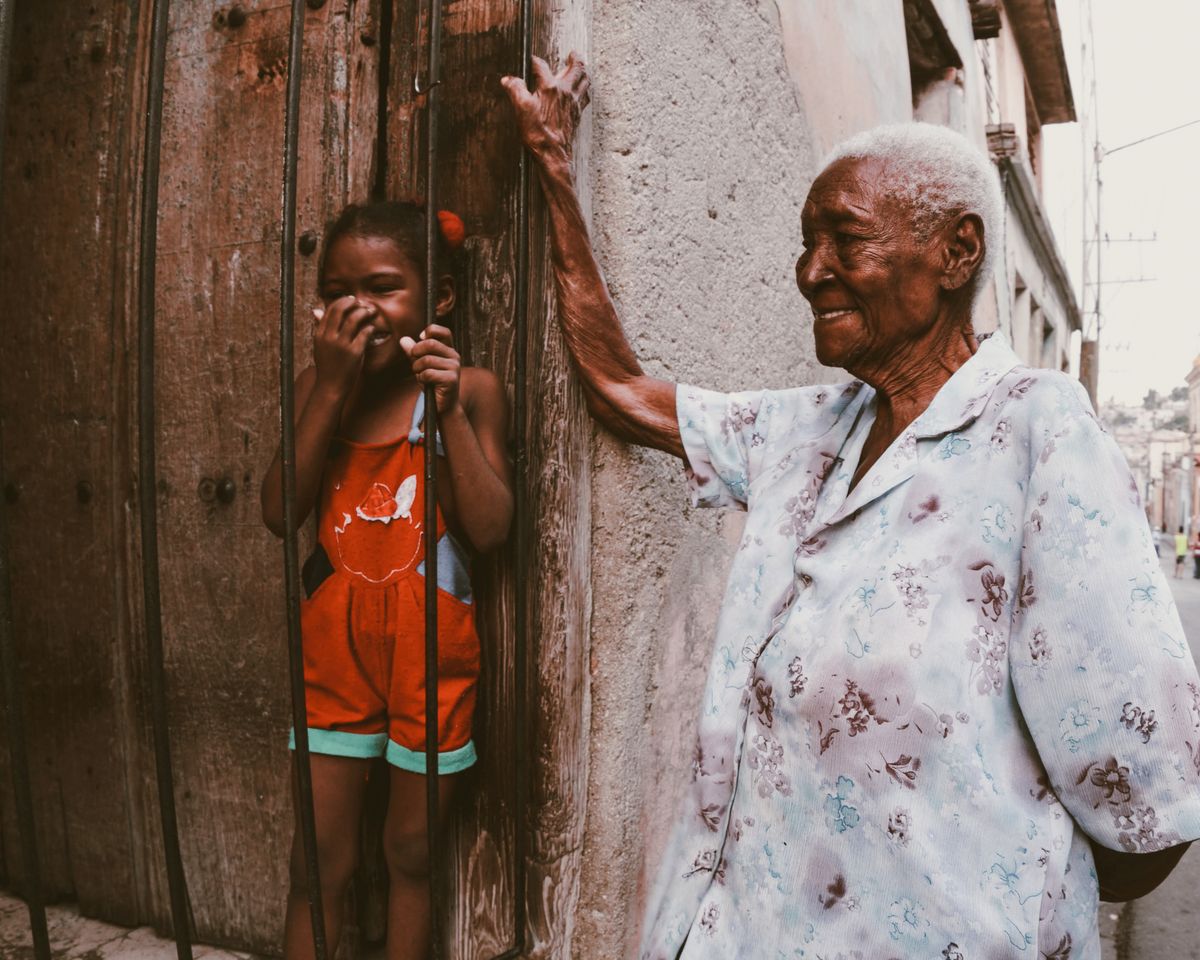
There is a woman in Moshi whose closest friends have not used her first name in thirty years.
Moshi is a coffee town in northern Tanzania, built on the lower slopes of Kilimanjaro. On clear mornings the mountain stands at the end of ordinary streets, close enough to feel like a neighbour, and by lunchtime it has usually disappeared into cloud as though it was never there.
At the market she is Mama Neema. At church she is Mama Neema. Her husband, in front of other people, calls her Mama Neema. Her own mother calls her Mama Neema. She has a first name, printed on a national ID card in a drawer, and almost nobody alive uses it.
Her daughter Neema is twenty-nine and lives in Dar es Salaam, Tanzania's largest city and one of the great harbours of the Indian Ocean, where wooden dhows still work the water alongside container ships. The name is Arabic. It means grace, or favour.
This is not a nickname, and it is not affection. It is a naming system, and it runs quietly underneath a great many East African families. When you choose your first child's name, you are choosing the name that a hundred other people will use for you, for the rest of your life.
The name you did not know you were choosing
Linguists call it teknonymy: naming a parent after their child. In Swahili it is everywhere and almost invisible, because it is so ordinary that nobody explains it.
- Mama Amani — mother of Amani (amani, peace; ah-MAH-nee)
- Baba Juma — father of Juma (juma, born on a Friday; JOO-mah)
- Mama Zawadi — mother of Zawadi (zawadi, gift; zah-WAH-dee)
The pattern is simple. Once the first child arrives, the parents become Mama and Baba plus that child's name. The old first names do not disappear, exactly. They just stop being needed. Official forms use them. Life does not.
It is worth sitting with what that actually does. In English, a parent's identity absorbs the child: she becomes "someone's mum," a role that swallows a name. In Swahili the opposite happens. The child's name is the one that survives, and the parents attach to it. The smallest person in the house is the reference point for the two largest.
When a neighbour calls Mama Neema across a courtyard, she is not calling a woman. She is calling a relationship, out loud, in public, twenty times a day.
What this means if you are choosing a name right now
Here is the practical part, and it is the part almost no name list will tell you.
Say the full construction out loud before you decide. Not just the name. The name with Mama and Baba in front of it.
- Mama Tumaini. Baba Tumaini. (tumaini, hope; too-mah-EE-nee)
- Mama Nuru. Baba Nuru. (nuru, light; NOO-roo)
- Mama Baraka. Baba Baraka. (baraka, blessing; bah-RAH-kah)
Some names are lovely alone and awkward in the construction. Long names get clipped hard by it — Mama Tumaini tends to soften into Mama Tumai in a way that Tumaini alone never would. Names that begin with a vowel run into the a of Mama and blur. Others gain something: short, open names sit beautifully in front of Mama and Baba, and you hear immediately why a family might land on them.
This is a fourth question to add to the ones we ask before any name makes the shortlist in giving a child abroad a Swahili name: would you be glad to be called this? Because if your family in East Africa uses this system, you will be.
When you live abroad, it disappears first
The system needs other people to work. It lives in courtyards, markets, mosque steps and church car parks — anywhere a name is called across a distance by someone who knows your family.
Move to Minneapolis, or Manchester, or Muscat on the coast of Oman, where Swahili has been spoken in family kitchens since the days when Zanzibar and Oman were governed as one. Wherever you land, there is nobody to call it. Your neighbours use your first name. Your colleagues use your first name. Your child's school certainly uses your first name. Within a year, the only place Mama Neema exists is on a phone screen when your mother rings.
Most diaspora families do not decide to let this go. It simply has nobody left to say it. A few small things keep it alive, and they cost nothing.
Let the grandparents set the terms
When your parents call you Mama or Baba plus your child's name, do not correct them or translate it for the people listening. Let your children hear it used naturally by someone with the authority to use it.
Use it in the family group chat
Written down, it survives. Children read it and learn the pattern without a lesson.
Say it back
Your own parents are Bibi (grandmother; BEE-bee) and Babu (grandfather; BAH-boo), or Mama and Baba plus your name. Using their names in front of your children teaches the whole system in one sentence.
Explain it once, properly
Around six or seven, a child can understand: my grandmother's name changed when your aunt was born, and that is how much a name matters in our family. That is not a language lesson. That is an inheritance.
The part that lands later
Somewhere around fifteen, most children of the diaspora start asking harder questions about where they come from. Not the postcard version. The real one.
A child who knows that their grandmother is called Mama Neema because of an aunt born decades ago has something specific to hold. Not a country on a map. A rule about how their family works, and evidence that names in that family are load-bearing.
That is the whole argument for choosing carefully. Not that a Swahili name is beautiful, though it is. That in a Swahili family, a name does work. It travels sideways into the generation above. It gets used ten thousand times. It outlives the paperwork.
You are not labelling a baby. You are naming a household.
Quick answers
What does Mama Neema actually mean?
"Mother of Neema." In much of East Africa a parent is addressed by their firstborn's name rather than their own.
Is this only for mothers?
No. Fathers become Baba plus the same child's name — Mama Juma and Baba Juma are usually a couple.
What is the word for grandmother and grandfather?
Bibi (BEE-bee) for grandmother and Babu (BAH-boo) for grandfather.
Does the name change if more children arrive?
Usually not. It stays with the firstborn, which is why that first choice carries so much weight.
One small thing tonight
Say your own shortlist out loud with Mama and Baba in front of it, and listen to which one settles. Then, if you want the names themselves, start with our guide to authentic Swahili names and their meanings, try the Swahili name finder, or play one round of Neno with your child before bed.
Your turn. If you grew up with this, whose name did your parents wear — and did it follow them abroad?
Cover photograph by Mehmet Turgut Kirkgoz on Pexels.
Where to go next
🔢
Count 1–10 in Swahili
Moja to kumi with tap-to-hear audio — the most-loved page on the site.
Learn more🗣️
First Swahili Words for Kids
Greetings, family, food and animals — bite-sized and beginner-friendly.
Learn more✨
Make a Free Personalized Story
Pop in your child's name and get a bilingual Swahili story in seconds.
Learn more